Stress and Weight Gain: Causes, Effects & How to Control It Naturally
Stress and Weight Gain
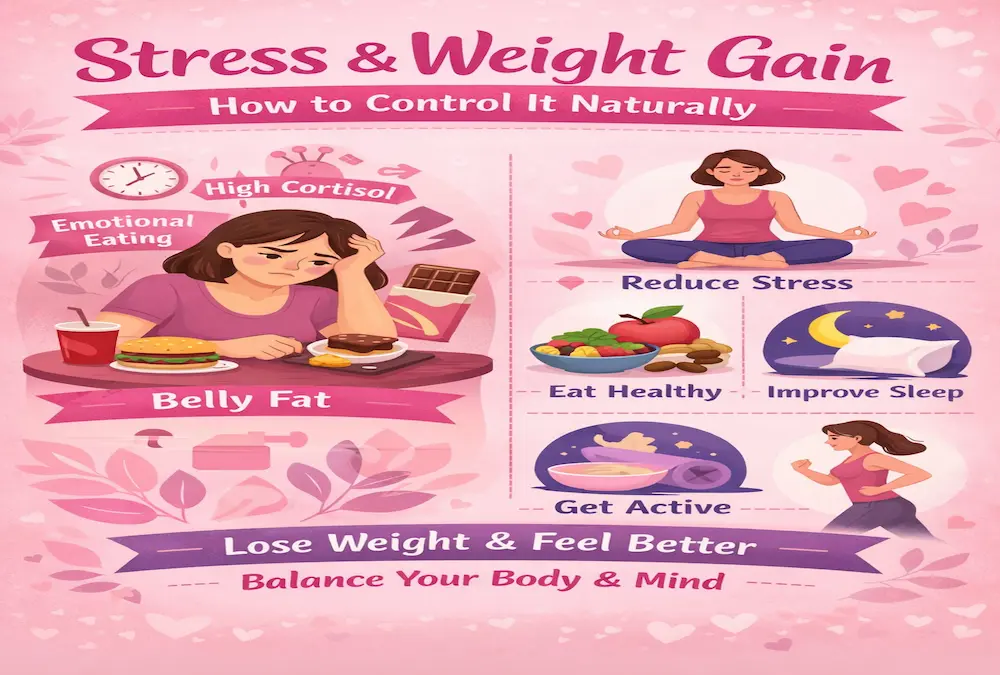
Many people struggle with weight gain even when they are eating normally. One hidden reason behind this problem is stress. When your mind is under pressure, your body reacts in ways that can increase fat storage and unhealthy eating habits.
The good news is that once you understand how stress affects your weight, you can take simple steps to control it. This guide explains the connection and gives practical solutions you can start today.

How Stress Causes Weight Gain
Stress affects your hormones, appetite, sleep, and lifestyle habits. Over time, these changes make it easier to gain weight, especially around the belly area.
1. Cortisol and Fat Storage
When you feel stressed, your body releases a hormone called cortisol. High cortisol levels increase fat storage and slow down metabolism.
- Increases belly fat
- Raises blood sugar levels
- Makes the body store energy as fat
2. Emotional Eating
Stress often leads to emotional eating. Many people crave sugary or high-fat foods because they temporarily improve mood.
These extra calories add up quickly and lead to weight gain over time.
3. Poor Sleep
Stress can disturb your sleep. Lack of sleep increases hunger hormones and reduces the hormone that makes you feel full.
This makes you eat more the next day without realizing it.
4. Reduced Physical Activity
When you feel mentally exhausted, exercise becomes difficult. A sedentary lifestyle slows calorie burning and contributes to weight gain.
How to Control Stress and Prevent Weight Gain
Managing stress does not require complicated methods. Small daily habits can make a big difference.
1. Practice Deep Breathing
Deep breathing helps calm your nervous system and lower cortisol levels.
- Inhale slowly for 4 seconds
- Hold your breath for 4 seconds
- Exhale slowly for 6 seconds
- Repeat for 3–5 minutes
2. Follow a Regular Exercise Routine
Exercise is one of the best stress relievers. It improves mood and helps burn excess calories.
- 30 minutes of walking daily
- Light strength training
- Yoga or stretching
3. Eat Mindfully
Before eating, ask yourself: “Am I hungry or stressed?”
Healthy stress snacks include:
- Fruits
- Nuts
- Buttermilk or yogurt
- Dark chocolate (small portion)
4. Improve Sleep Quality
Good sleep helps balance hunger hormones and reduce cravings.
- Sleep 7–8 hours daily
- Avoid screens before bed
- Keep a fixed sleep schedule
5. Take Short Breaks During the Day
Continuous work increases mental pressure. Take a 5-minute break every hour to stretch, walk, or relax your eyes.
Healthy Daily Routine to Reduce Stress
Follow this simple routine to keep stress under control:
- Morning: Light stretching or walking
- Afternoon: Eat balanced meals on time
- Evening: Avoid junk food and sugary drinks
- Night: Relax with reading, prayer, or meditation
Consistency is more important than perfection.
Key Benefits of Managing Stress
- Reduces belly fat
- Controls emotional eating
- Improves metabolism
- Better sleep quality
- More energy throughout the day
- Improved mental health and focus
FAQ: Stress and Weight Gain
Can stress really make you gain weight?
Yes. High cortisol levels increase fat storage and trigger cravings for unhealthy foods.
Where does stress weight usually appear?
Most stress-related weight gain appears around the stomach area.
How long does it take to reduce stress weight?
With proper sleep, exercise, and healthy eating, you may notice changes within a few weeks.
Is exercise necessary to control stress weight?
Yes. Physical activity reduces cortisol and helps burn extra calories.
Conclusion
Stress and weight gain are closely connected, but the problem is manageable. By controlling stress levels, improving sleep, and staying active, you can protect your body from unwanted fat gain.
Start with small habits like deep breathing, daily walking, and mindful eating. Over time, these simple changes will improve both your mental health and your physical fitness.
Remember, a calm mind supports a healthy body. Managing stress is not just good for weight loss—it improves your overall quality of life.


