Walking vs Running: Which Burns More Fat for Weight Loss?
Walking vs Running
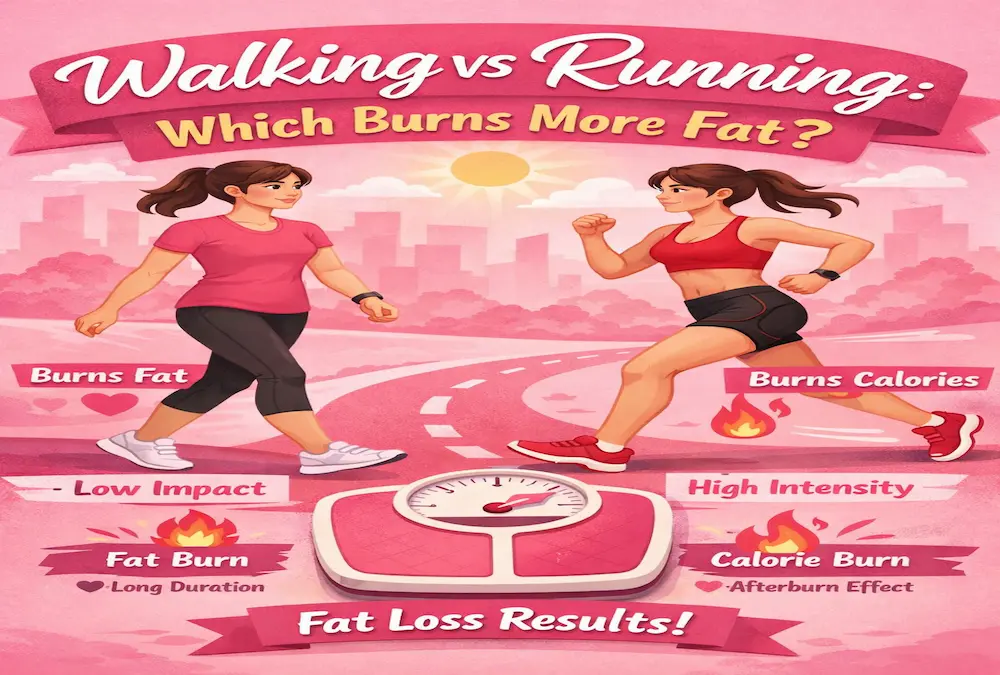
Walking and running are two of the most popular exercises in the world. They are simple, free, and require no gym membership. But when the goal is fat loss, many people ask the same question.
Is walking better for burning fat, or does running give faster results? The answer is not as simple as “one is better than the other.” It depends on intensity, duration, body type, and consistency.
In this guide, we’ll break everything down in clear, simple terms. By the end, you’ll know which one fits your lifestyle and goals best.
Understanding Fat Burning Basics
How the Body Burns Fat
Your body burns calories all the time, even when resting. Fat loss happens when you burn more calories than you eat. This is known as a calorie deficit.
During exercise, your body uses both fat and carbohydrates for fuel. The ratio depends on how hard and how long you exercise. Lower intensity uses more fat, while higher intensity burns more calories overall.
If you want a deeper explanation, Read more about fat in nutrition.
Fat Burn vs Calorie Burn
This is where many people get confused. Burning more fat does not always mean losing more fat overall. Total calorie burn matters most.
An exercise can burn a higher percentage of fat but fewer calories. Another exercise may burn fewer fat calories but more total calories. Both can help with weight loss in different ways.
Walking for Fat Loss
Why Walking Works
Walking is a low-impact exercise that almost anyone can do. It puts minimal stress on joints and muscles. This makes it ideal for beginners and overweight individuals.
Because walking is lower intensity, your body relies more on fat for fuel. This is why walking is often called a “fat-burning zone” exercise. It is easy to maintain for long periods.
Calories Burned While Walking
The number of calories burned depends on speed and body weight. A brisk walk burns more calories than a slow stroll. Inclines also increase calorie burn.
- Slow walking: lower calorie burn
- Brisk walking: moderate calorie burn
- Incline walking: higher calorie burn
While walking burns fewer calories per minute than running, it can be done for much longer without exhaustion. This balances out the total calorie burn.
Who Should Choose Walking?
Walking is perfect if you:
- Are new to exercise
- Have joint or knee pain
- Prefer longer, relaxing workouts
- Want a sustainable daily habit
Running for Fat Loss
Why Running Burns More Calories
Running is a high-intensity activity. It requires more energy in a shorter time. This leads to a higher calorie burn per minute.
Even though running uses more carbohydrates during exercise, the total calories burned are much higher. This often results in faster fat loss when combined with a proper diet.
Afterburn Effect (EPOC)
One major advantage of running is the afterburn effect. After intense exercise, your body continues burning calories. This happens as your body recovers.
Walking has little afterburn effect. Running, especially interval running, increases post-workout calorie burn. This adds up over time.
Who Should Choose Running?
Running may be better if you:
- Have good joint health
- Want faster results
- Have limited workout time
- Enjoy high-energy workouts
Walking vs Running: Direct Comparison
Fat Burning Efficiency
Walking burns a higher percentage of fat during exercise. Running burns more total calories overall. Both can lead to fat loss when done consistently.
Time and Sustainability
Walking is easier to sustain daily. Running is harder but saves time. The best workout is the one you can stick with long term.
Injury Risk
Walking has a very low risk of injury. Running increases stress on joints and muscles. Poor form or overtraining can lead to injuries.
Consistency beats intensity. A daily walk is better than running once and quitting.
Key Benefits
Benefits of Walking
- Low impact and joint-friendly
- Easy to maintain daily
- Lower injury risk
- Great for mental health
Benefits of Running
- Burns more calories in less time
- Improves cardiovascular fitness
- Boosts metabolism
- Strong afterburn effect
How to Choose the Best Option for You
Step-by-Step Decision Guide
- Check your fitness level
- Consider joint health
- Decide how much time you have
- Choose what you enjoy
- Stay consistent
You can also mix both. Walking on rest days and running on active days works well. This reduces injury risk while maximizing fat loss.
Frequently Asked Questions (FAQ)
Is walking better than running for belly fat?
No exercise targets belly fat specifically. Fat loss happens across the whole body. Both walking and running help reduce belly fat over time.
How long should I walk to burn fat?
A brisk walk of 30–60 minutes is effective. Longer duration increases fat usage. Consistency matters more than speed.
Does running burn muscle?
Running does not burn muscle if you eat enough protein. Strength training also helps preserve muscle mass. Extreme calorie deficits cause muscle loss, not running itself.
Can I lose weight by walking only?
Yes, many people lose weight through walking alone. Pair it with a balanced diet for best results. Daily movement makes a big difference.
Conclusion
So, Which Burns More Fat?
Running burns more calories in less time. Walking burns more fat during the activity itself. Both can lead to fat loss when done consistently.
If you enjoy walking and can do it daily, choose walking. If you like intensity and quick workouts, choose running. There is no single “best” option for everyone.
The real secret to fat loss is simple. Move your body regularly, eat smart, and stay consistent. That’s where real results come from.


