What Is Fat in Nutrition? Types, Functions & Health Benefits
What is Fat in Nutrition?
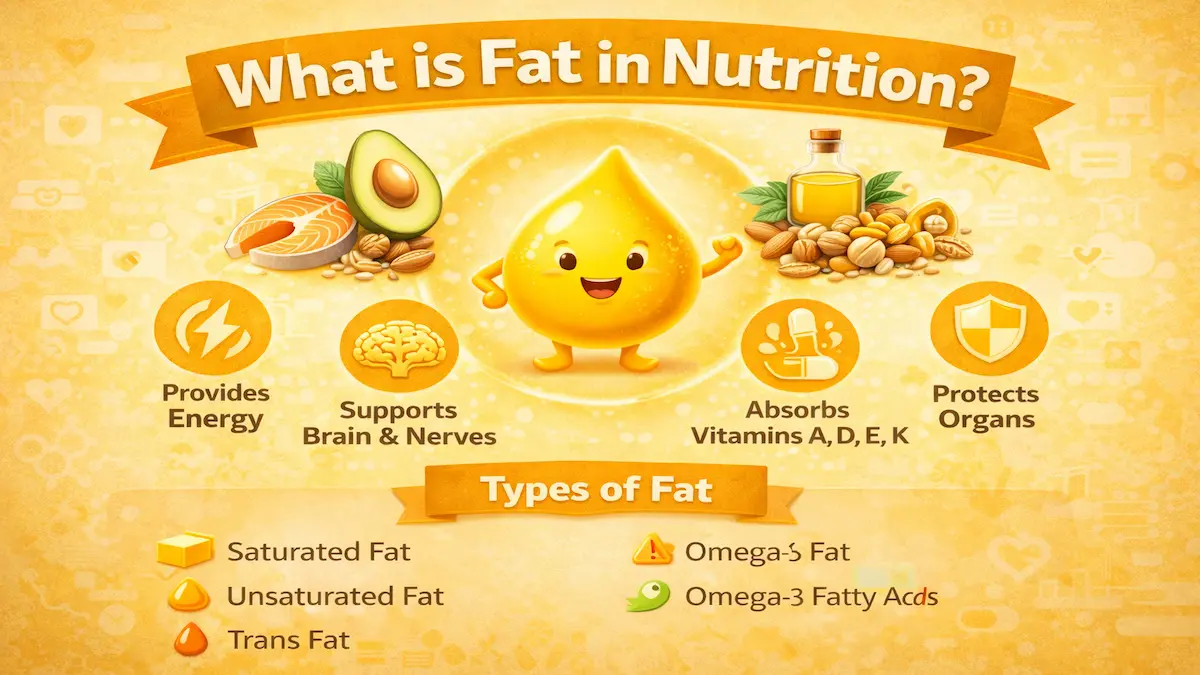
Fat is one of the three main macronutrients required by the human body. It provides energy, supports cell growth, and helps absorb vitamins. Despite myths, fat is essential for good health when consumed correctly.
Many people fear fat because of weight gain concerns. However, not all fats are harmful. Understanding fat in nutrition helps you make healthier food choices.
What is Fat?
Definition of Fat in Nutrition
Fat is a nutrient that provides energy to the body. It contains more calories per gram than carbohydrates or protein. Fat is stored in body tissues and used when energy is needed.
Why Fat is Called a Macronutrient
Macronutrients are nutrients needed in large amounts. Fat is a macronutrient because it plays a major role in body functions. It supports long-term energy needs and overall health.
Calories Provided by Fat
Each gram of fat provides 9 calories. This makes fat the most energy-dense nutrient. Because of this, portion control is important.
Types of Fat in Nutrition
Saturated Fat
Saturated fat is usually solid at room temperature. It is found in butter, ghee, cheese, and fatty meat. Excess intake may increase heart disease risk.
Unsaturated Fat
Unsaturated fats are liquid at room temperature. They are considered healthy fats. These fats support heart health and reduce bad cholesterol.
Monounsaturated Fat
This fat helps lower harmful cholesterol levels. It is found in olive oil, nuts, and avocados. It supports heart and brain health.
Polyunsaturated Fat
Polyunsaturated fats include omega-3 and omega-6 fats. They are essential fats the body cannot make. These fats support brain and hormone function.
Trans Fat
Trans fat is an unhealthy fat. It is found in processed and fried foods. Trans fat increases the risk of heart disease.
Functions of Fat in the Human Body
Energy Storage and Supply
Fat acts as a long-term energy reserve. When carbohydrates are low, fat provides fuel. This is important during fasting or exercise.
Protection of Organs
Fat cushions and protects vital organs. It helps absorb shock and prevents injury. This function is essential for survival.
Absorption of Vitamins
Fat helps absorb fat-soluble vitamins. These include vitamins A, D, E, and K. Without fat, these vitamins are not absorbed properly.
Hormone Production
Fat supports hormone creation. Hormones control growth, metabolism, and reproduction. Healthy fat intake supports hormonal balance.
Sources of Fat in Food
Healthy Fat Sources
- Nuts and seeds
- Olive oil and mustard oil
- Avocados
- Fatty fish
Animal-Based Fat Sources
Animal fats come from milk, eggs, meat, and fish. They contain both healthy and unhealthy fats. Choosing lean options is important.
Plant-Based Fat Sources
Plant fats are generally healthier. They are rich in unsaturated fats. These fats support heart health.
How Much Fat Do We Need Daily?
Recommended Daily Intake
Fat should provide 20–35% of daily calories. This varies based on age, gender, and activity level. Balance is the key to healthy intake.
Fat Intake for Active People
Athletes may need slightly more healthy fats. Fat helps with endurance and recovery. It should not replace protein or carbohydrates.
Fat Intake for Weight Management
Healthy fats increase satiety. They help control hunger and overeating. Moderation prevents weight gain.
Common Myths About Fat
Myth: Fat Makes You Fat
Fat alone does not cause weight gain. Excess calories from any source cause weight gain. Quality and portion size matter more.
Myth: Low-Fat Diets Are Always Healthy
Very low-fat diets can cause nutrient deficiencies. Healthy fats are essential for body functions. Balance is more important than restriction.
Myth: All Fats Are Bad
Only trans fats and excess saturated fats are harmful. Unsaturated fats are beneficial. Understanding fat types prevents confusion.
Fat and Muscle Growth
Role of Fat in Fitness
Fat supports hormone production needed for muscle growth. It helps in recovery after workouts. Balanced fat intake improves performance.
👉 Read more about healthy high-protein meal ideas for muscle growth
Key Benefits of Fat in Nutrition
- Provides long-lasting energy
- Supports brain and nerve health
- Helps absorb essential vitamins
- Protects vital organs
- Supports hormone production
Frequently Asked Questions (FAQ)
Is fat necessary in a daily diet?
Yes, fat is essential for health. The body cannot function properly without fat. Choosing healthy fats is important.
Which fat is the healthiest?
Unsaturated fats are the healthiest. These include omega-3 and monounsaturated fats. They support heart and brain health.
Should I avoid fat for weight loss?
No, healthy fats help control hunger. They support sustainable weight loss. Avoiding fat completely is not recommended.
Can children eat fat?
Yes, children need fat for growth and development. Healthy fats support brain development. Quality matters more than quantity.
Conclusion
Fat is an essential nutrient in human nutrition. It supports energy, vitamin absorption, and hormone balance. Understanding fat helps you make smarter food choices.
Not all fats are harmful. Choosing healthy fats in the right amount improves health. Balance, not fear, is the key to nutrition success.


