Strength Training for Women: Myths vs Facts
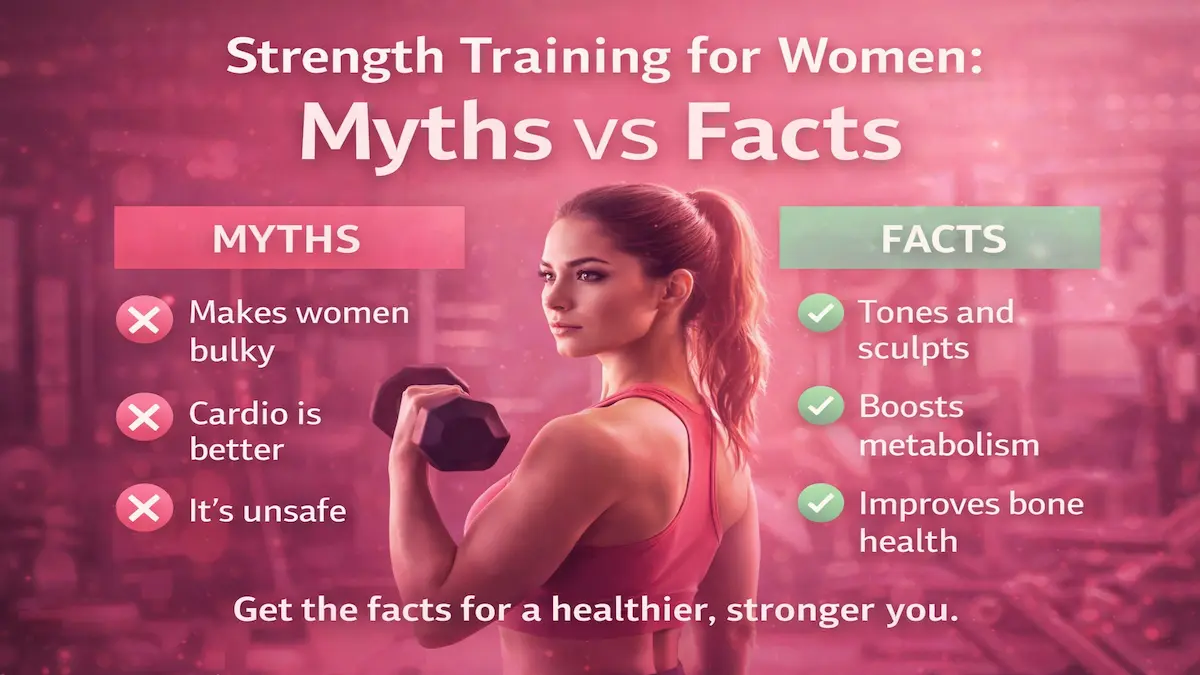
Strength Training for Women: Myths vs Facts
Strength training for women is often misunderstood. Many women avoid lifting weights due to fear and misinformation.
The truth is, strength training is one of the healthiest and most empowering forms of exercise for women of all ages.
In this guide, we break down common myths and replace them with real facts. You will also learn benefits, safety tips, and answers to common questions.
Common Myths About Strength Training
Myth 1: Strength Training Makes Women Bulky
This is the most common myth women hear. Many believe lifting weights will make them look masculine.
In reality, women have lower testosterone levels. This makes extreme muscle growth very unlikely.
Myth 2: Cardio Is Better Than Strength Training
Cardio is good for heart health. However, relying only on cardio limits overall fitness.
Strength training builds muscle, improves metabolism, and supports long-term fat loss.
Myth 3: Strength Training Is Unsafe for Women
Some women fear injury from weight training. This fear often comes from improper guidance.
With correct form and gradual progress, strength training is very safe.
Facts About Strength Training for Women
Fact 1: Strength Training Improves Body Shape
Strength training helps tone muscles. It creates a lean and firm appearance.
Muscle also improves posture and balance, making everyday movements easier.
Fact 2: It Boosts Metabolism
Muscle tissue burns more calories than fat. This means your body burns energy even at rest.
Over time, this supports healthy weight management.
Fact 3: Strength Training Supports Bone Health
Weight-bearing exercises strengthen bones. This is especially important for women.
Strong bones reduce the risk of osteoporosis later in life.
How Women Can Start Strength Training
Step-by-Step Beginner Approach
- Start with bodyweight exercises.
- Learn proper form before adding weight.
- Train 2–3 times per week.
- Increase weight gradually.
- Allow rest and recovery.
Consistency matters more than lifting heavy weights. Progress slowly and stay patient.
Exercises Ideal for Beginners
- Squats
- Lunges
- Push-ups
- Dumbbell rows
- Glute bridges
These movements build full-body strength and reduce injury risk.
Key Benefits
Improved Confidence
Lifting weights builds both physical and mental strength. Many women feel more confident and capable.
Better Hormonal Balance
Strength training supports healthy hormones. This helps with mood, energy, and stress.
Long-Term Health Protection
It reduces risk of diabetes, heart disease, and joint problems.
Supports Healthy Nutrition Habits
Strength training pairs well with good nutrition. Read more about balanced eating here: Read more about what to eat before and after training
Frequently Asked Questions
How many days should women strength train?
Two to four days per week is ideal. This allows muscle recovery and growth.
Is strength training suitable for older women?
Yes, it is highly beneficial. It improves balance, strength, and bone health.
Do women need supplements for strength training?
Most women do not need supplements. A balanced diet is usually enough.
Can strength training help with government disability support?
In some cases, improved physical health supports independence. Read more about support systems here: Read more about UDID scheme benefits
Conclusion
Strength training for women is powerful, safe, and supported by science.
Myths often stop women from reaching their full potential. Facts show that lifting weights builds health and confidence.
With proper guidance, consistency, and mindset, strength training can transform a woman’s life.
 |
| “Strength training for women myths vs facts with dumbbell workout.” |


Comments
Post a Comment