Low-Carb vs Keto Diet: Which Is Better for Weight Loss?
Low-Carb vs Keto
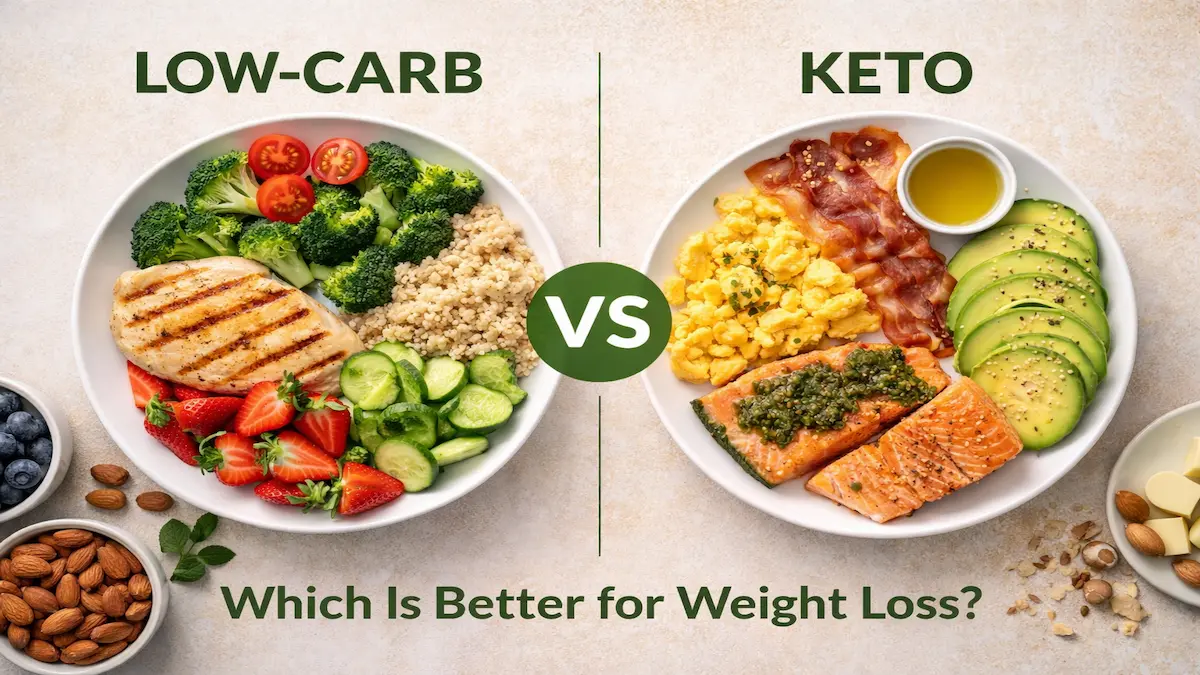
Low-carb and keto diets are two of the most popular weight-loss approaches today. Both focus on reducing carbohydrates, but they work very differently.
Choosing the right diet depends on your body, lifestyle, and long-term goals. This guide explains the differences clearly so you can decide wisely.
What Is a Low-Carb Diet?
Basic Concept
A low-carb diet reduces daily carbohydrate intake without eliminating it completely. The focus is on balanced eating rather than strict rules.
Typical Carb Intake
Most low-carb diets allow 50–150 grams of carbs per day. This range supports weight loss while staying flexible.
Foods Commonly Allowed
- Vegetables and leafy greens
- Lean meats and fish
- Eggs and dairy
- Healthy fats in moderation
What Is the Keto Diet?
Basic Concept
The keto diet is a very low-carb, high-fat diet. Its goal is to push the body into a state called ketosis.
Understanding Ketosis
In ketosis, the body burns fat for energy instead of carbohydrates. This process can lead to rapid weight loss.
Typical Carb Intake
Keto usually limits carbs to 20–50 grams per day. This strict limit requires careful food planning.
Low-Carb vs Keto: Key Differences
Flexibility
Low-carb diets are easier to maintain long-term. Keto requires strict tracking and discipline.
Speed of Weight Loss
Keto often leads to faster early weight loss. Low-carb weight loss is slower but steadier.
Sustainability
Many people find low-carb diets more realistic for daily life. Keto can feel restrictive over time.
Quick comparison:
- Low-carb = balanced and flexible
- Keto = strict and fast-acting
Key Benefits
Benefits of a Low-Carb Diet
- Gradual and steady fat loss
- Less hunger and cravings
- Easier social and family eating
Benefits of the Keto Diet
- Rapid initial weight loss
- Strong appetite control
- Improved insulin sensitivity
Potential Risks and Side Effects
Low-Carb Diet Risks
Low-carb diets are generally safe. However, poor food choices can slow progress.
Keto Diet Risks
Keto may cause fatigue, headaches, or nutrient deficiencies. These effects are often called the “keto flu.”
Medical supervision is recommended for long-term keto dieting.
Which Diet Is Better for Weight Loss?
For Beginners
Low-carb diets are better for beginners. They allow easier adjustment and consistency.
For Fast Results
Keto may suit people seeking quick short-term fat loss. Discipline is essential.
For Long-Term Health
Low-carb diets are usually more sustainable and balanced. Consistency matters more than speed.
FAQ – Low-Carb vs Keto
Can I switch from keto to low-carb?
Yes. Many people start with keto and transition to low-carb. This helps maintain results long-term.
Which diet burns more fat?
Keto burns fat faster initially. Low-carb burns fat steadily over time.
Is keto safe for everyone?
No. People with certain medical conditions should avoid keto. Always consult a professional.
Do I need exercise on these diets?
Yes. Exercise improves fat loss and overall health on both diets.
Related Reading
Read more about protein intake and fat loss here: Read more about high-protein diet for fat loss
Conclusion
Both low-carb and keto diets can help with weight loss. The best choice depends on your lifestyle and goals.
If you want flexibility and long-term success, low-carb works well. If you want fast results and can stay strict, keto may help.
Choose the diet you can follow consistently — that is the real key to weight loss.


