Intermittent Fasting for Weight Loss: Beginner to Advanced Guide
Intermittent Fasting
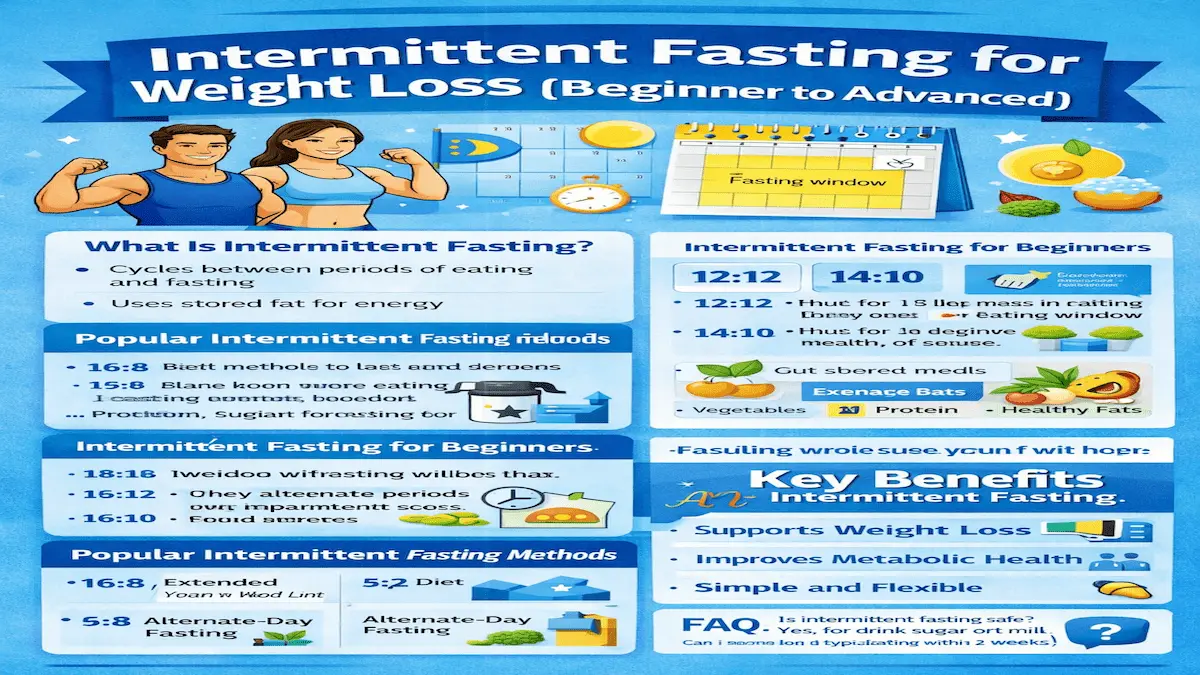
Intermittent fasting has become one of the most popular weight loss strategies worldwide. It is simple, flexible, and does not require expensive supplements or strict meal plans.
Instead of focusing on what you eat, intermittent fasting focuses on when you eat. This guide explains intermittent fasting from beginner to advanced level in clear and simple language.
What Is Intermittent Fasting?
Understanding the Concept
Intermittent fasting is an eating pattern that cycles between periods of eating and fasting. During fasting hours, you avoid calories and allow your body to rest from digestion.
This approach helps your body use stored fat for energy instead of relying only on food. Over time, this can support steady and sustainable weight loss.
Why Intermittent Fasting Works
When you fast, insulin levels drop and fat-burning hormones increase. This makes it easier for your body to break down fat and use it as fuel.
Intermittent fasting also reduces overall calorie intake without strict calorie counting.
Intermittent Fasting for Beginners
Best Fasting Method for Beginners
If you are new to intermittent fasting, starting slow is important. The most beginner-friendly method is the 12:12 or 14:10 fasting plan.
- 12:12 – Fast for 12 hours, eat within 12 hours
- 14:10 – Fast for 14 hours, eat within 10 hours
Beginner Eating Window Tips
During your eating window, focus on balanced and nutritious meals. Avoid overeating just because the fasting period ended.
Choose whole foods, vegetables, lean protein, and healthy fats. This helps prevent fatigue and hunger.
Popular Intermittent Fasting Methods
16:8 Method
The 16:8 method is the most popular intermittent fasting plan. You fast for 16 hours and eat within an 8-hour window.
For example, you may eat between 12 PM and 8 PM. This method is effective and easy to maintain long term.
5:2 Diet
In the 5:2 method, you eat normally for five days a week. On two non-consecutive days, calorie intake is reduced.
This approach suits people who prefer flexibility rather than daily fasting.
Alternate-Day Fasting
Alternate-day fasting involves fasting every other day. Some people consume very low calories on fasting days.
This method is more advanced and may not be suitable for beginners.
Intermittent Fasting for Advanced Levels
Extended Fasting (18–24 Hours)
Advanced users may practice 18:6, 20:4, or even 24-hour fasting. These longer fasts increase fat-burning but require experience.
It is important to listen to your body and stay hydrated.
Combining Fasting with Exercise
Many advanced users combine intermittent fasting with workouts. Light exercise during fasting can increase fat loss.
Strength training is best done during eating windows for recovery.
What to Eat During Intermittent Fasting
Best Foods for Weight Loss
Eating the right foods is essential for success. Nutrient-dense meals support energy and prevent muscle loss.
- Lean protein like eggs, fish, and legumes
- Vegetables and fruits
- Healthy fats such as nuts and olive oil
Foods to Limit
Highly processed foods can slow progress. They may cause blood sugar spikes and hunger.
- Sugary drinks
- Refined carbohydrates
- Excess junk food
Read more about mushroom nutrition facts and their role in muscle growth and fat loss to improve your fasting meals.
Common Mistakes to Avoid
Skipping Nutrition
Fasting does not mean starving. Skipping nutrients can cause weakness and slow metabolism.
Overeating After Fasting
Eating large portions after fasting can cancel the calorie deficit. Mindful eating is important.
Ignoring Hydration
Water intake is crucial during fasting. Dehydration can cause headaches and fatigue.
Key Benefits of Intermittent Fasting
Supports Weight Loss
Intermittent fasting helps reduce calorie intake naturally. It improves fat-burning without strict dieting.
Improves Metabolic Health
Fasting helps regulate insulin levels. This supports better blood sugar control.
Simple and Flexible
There is no need for special foods or supplements. You can adapt fasting to your lifestyle.
Frequently Asked Questions (FAQ)
Is intermittent fasting safe?
Yes, for most healthy adults it is safe. People with medical conditions should consult a doctor.
Can I drink coffee during fasting?
Yes, black coffee and plain tea are allowed. Avoid sugar and milk during fasting hours.
How long before results appear?
Some people notice changes within two weeks. Consistent practice gives better long-term results.
Is intermittent fasting suitable for women?
Yes, but women should start slowly. Listening to the body is important.
Conclusion
Final Thoughts
Intermittent fasting is a practical and effective approach to weight loss. It works well when combined with healthy food choices.
Beginners should start slowly and progress over time. Advanced users can customize fasting for better results.
When done correctly, intermittent fasting supports fat loss, metabolic health, and long-term lifestyle balance.


