Quad Workouts: Best Exercises to Build Strong and Powerful Thighs
Quad Workouts: Best Exercises to Build Strong and Powerful Thighs
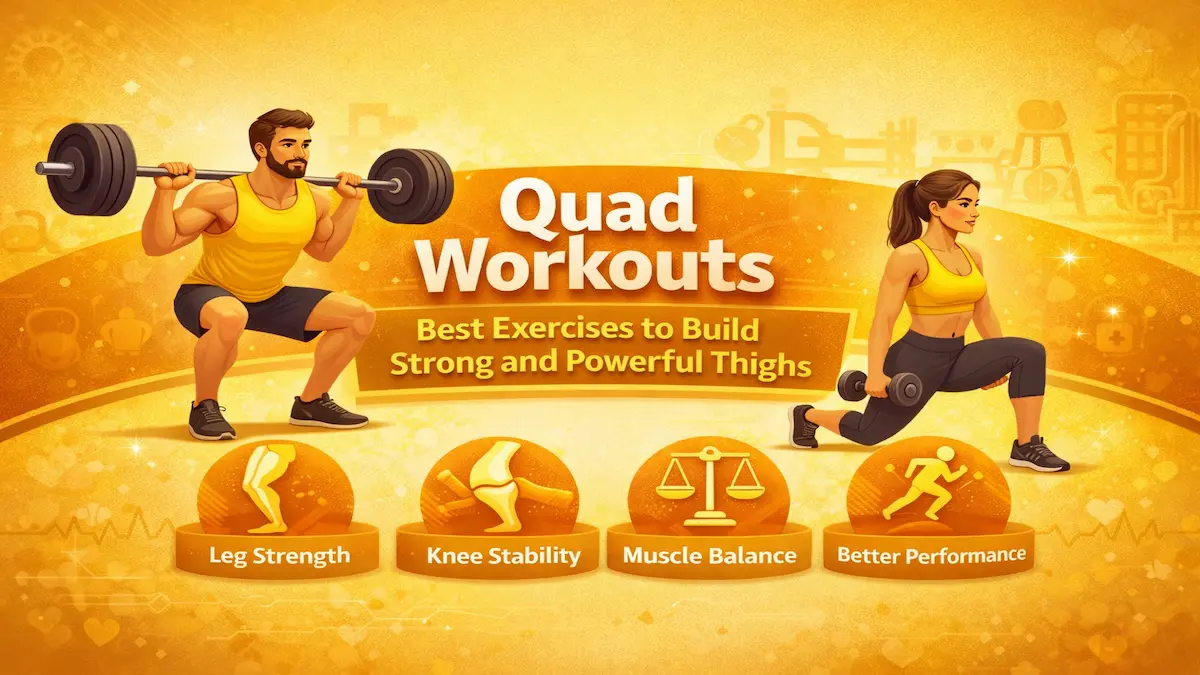
Quad workouts focus on strengthening the quadriceps muscles located at the front of your thighs. These muscles play a major role in walking, running, jumping, and daily movements. Strong quads improve balance, posture, and lower-body power. They are essential for both fitness beginners and advanced athletes.
Many people train legs but fail to target quads properly. This can lead to muscle imbalance and weaker performance. A well-planned quad workout improves strength, endurance, and injury prevention. This guide covers everything you need to know about quad workouts.
Understanding the Quadriceps Muscles
What Are the Quadriceps?
The quadriceps are a group of four muscles located on the front of the thigh. They include the rectus femoris, vastus lateralis, vastus medialis, and vastus intermedius. Together, these muscles help extend the knee. They are heavily used in almost every lower-body movement.
Why Quad Strength Matters
Strong quads support knee joints and improve leg stability. They help absorb impact during walking and running. Weak quads can increase the risk of knee pain and injuries. That is why quad workouts are important for long-term mobility.
Best Quad Workouts for Beginners
Bodyweight Squats
Bodyweight squats are one of the simplest quad exercises. They require no equipment and can be done anywhere. This exercise teaches proper movement patterns. It builds a strong foundation for advanced workouts.
- Stand with feet shoulder-width apart
- Lower hips while keeping chest upright
- Push through heels to stand up
Wall Sits
Wall sits are an isometric quad exercise. They improve muscle endurance and mental toughness. This workout is great for beginners. It also strengthens knee stability.
- Lean against a wall
- Lower until thighs are parallel to the floor
- Hold the position for time
Step-Ups
Step-ups mimic daily climbing movements. They activate quads while improving balance. This exercise is easy to scale. You can increase difficulty by adding weights.
Intermediate Quad Workouts
Goblet Squats
Goblet squats add resistance to basic squats. Holding a dumbbell improves posture. This exercise targets quads and core. It is excellent for strength progression.
- Hold a dumbbell close to your chest
- Squat down slowly
- Push up with controlled movement
Forward Lunges
Lunges isolate each leg individually. They help correct muscle imbalances. This exercise improves coordination and strength. It also increases hip flexibility.
- Step forward with one leg
- Lower until knee forms a right angle
- Push back to starting position
Bulgarian Split Squats
This advanced unilateral exercise targets quads deeply. It also works glutes and stabilizer muscles. Balance is key during this workout. Proper form reduces injury risk.
Advanced Quad Workouts
Barbell Back Squats
Barbell squats are the king of leg exercises. They build strength, size, and power. This compound movement heavily loads the quads. Proper technique is essential for safety.
Front Squats
Front squats place more emphasis on the quads. They require strong core engagement. This exercise improves posture and knee strength. It is ideal for advanced lifters.
Leg Press
Leg press allows heavy loading without stressing the back. Foot placement can shift quad emphasis. It is great for hypertrophy training. Controlled reps maximize results.
How to Structure a Quad Workout
Step-by-Step Quad Training Plan
- Warm up with light cardio and mobility
- Start with compound quad exercises
- Add isolation movements
- Finish with stretching
Training quads 1–2 times per week is enough for growth. Allow recovery between sessions. Overtraining can reduce performance. Consistency matters more than intensity.
Key Benefits of Quad Workouts
Improved Lower-Body Strength
Quad workouts increase leg power. They support movements like running and jumping. Stronger quads improve athletic performance. Daily activities become easier.
Better Knee Health
Strong quads stabilize the knee joint. They reduce pressure on ligaments. This lowers the risk of knee injuries. Quad training is important for joint longevity.
Enhanced Muscle Balance
Balanced leg muscles improve posture. They prevent overuse injuries. Quad workouts complement hamstring training. Balanced legs perform better overall.
Frequently Asked Questions (FAQ)
How often should I train quads?
Training quads 1–2 times per week is sufficient. Ensure proper recovery between workouts. Beginners should start slowly. Advanced lifters can increase volume.
Can quad workouts help with knee pain?
Yes, strengthening quads can reduce knee pain. Proper form is crucial. Consult a professional if pain persists. Avoid exercises that cause discomfort.
Do quad workouts burn fat?
Quad workouts burn calories and build muscle. They support fat loss when combined with diet. Compound movements increase energy expenditure. Consistency delivers results.
Conclusion
Quad workouts are essential for strong, healthy legs. They improve performance, balance, and joint health. From beginners to advanced athletes, everyone benefits. Proper training builds strength and confidence.
Focus on correct form and gradual progression. Combine quad workouts with rest and nutrition. Strong quads support an active lifestyle. Start training today for long-term benefits.
Read more about free dialysis schemes in government hospitals


Comments
Post a Comment