Shoulder Workout Guide: Best Exercises for Strong & Shaped Shoulders
Shoulder Workout: Build Strong, Shaped, and Pain-Free Shoulders
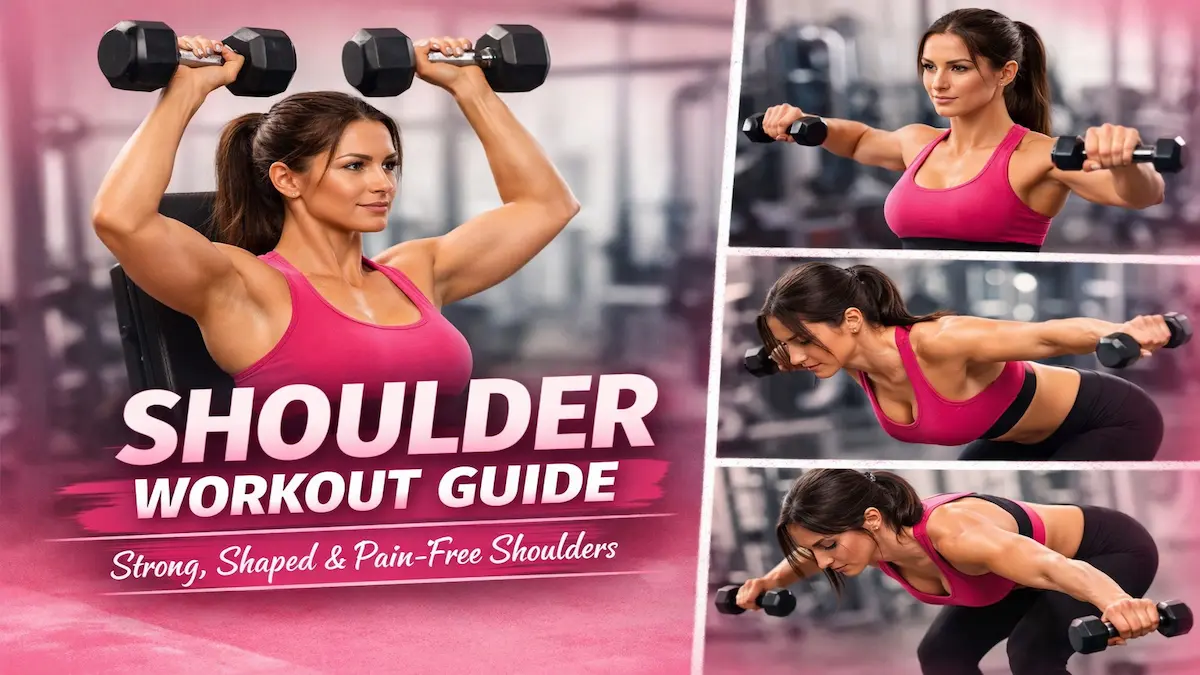
Shoulders play a major role in almost every upper-body movement. Strong shoulders improve posture, enhance strength, and reduce injury risk. A balanced shoulder workout trains all three heads of the deltoid muscle.
This guide explains shoulder anatomy, the best exercises, and safe routines. It is suitable for beginners as well as intermediate fitness enthusiasts. Follow these steps to train smarter and stay consistent.
Understanding Shoulder Muscles
Anterior (Front) Deltoids
The front delts help with pushing movements. They are active in presses and many chest exercises. Overtraining them without balance can cause posture issues.
Lateral (Side) Deltoids
Side delts give shoulders their wide, rounded look. They are trained mainly through lifting movements to the sides. Strong lateral delts improve upper-body symmetry.
Posterior (Rear) Deltoids
Rear delts support pulling and posture. They are often neglected in workouts. Training them reduces shoulder and neck strain.
Warm-Up Before Shoulder Workout
Why Warming Up Matters
A proper warm-up prepares joints and muscles. It increases blood flow and improves range of motion. This step lowers the risk of shoulder injuries.
Simple Warm-Up Routine
- Arm circles – 30 seconds forward and backward
- Shoulder shrugs – 15 repetitions
- Resistance band pull-aparts – 15 repetitions
Best Shoulder Workout Exercises
1. Shoulder Press
The shoulder press is a compound exercise. It targets the front and side delts effectively. You can perform it with dumbbells or a barbell.
- Hold weights at shoulder height
- Press upward until arms are extended
- Lower slowly with control
2. Lateral Raises
Lateral raises isolate the side delts. They help create shoulder width and shape. Use light to moderate weights for better control.
3. Front Raises
Front raises focus on the anterior delts. They improve lifting strength and shoulder stability. Avoid swinging the weights during the movement.
4. Rear Delt Fly
This exercise strengthens the rear delts. It supports good posture and shoulder balance. It can be done with dumbbells or cables.
5. Upright Rows (Controlled)
Upright rows activate shoulders and upper traps. Use a wide grip to reduce joint stress. Always lift within a comfortable range.
Beginner Shoulder Workout Plan
Simple Weekly Routine
- Shoulder Press – 3 sets of 10 reps
- Lateral Raises – 3 sets of 12 reps
- Front Raises – 2 sets of 12 reps
- Rear Delt Fly – 3 sets of 12 reps
Rest for 60–90 seconds between sets. Focus on form rather than heavy weights. Train shoulders 1–2 times per week.
Common Shoulder Workout Mistakes
Lifting Too Heavy
Using heavy weights reduces form quality. It increases strain on shoulder joints. Progress slowly to avoid injuries.
Ignoring Rear Delts
Skipping rear delt exercises creates imbalance. This may lead to rounded shoulders. Always include pulling movements.
Key Benefits of Shoulder Workout
Improved Upper-Body Strength
Strong shoulders support daily activities. They enhance performance in other workouts. This leads to better overall fitness.
Better Posture
Balanced shoulder training keeps the upper body aligned. It reduces neck and upper-back discomfort. This is especially helpful for desk workers.
Enhanced Shoulder Stability
Stronger muscles protect shoulder joints. This lowers the risk of strains and tears. Stability is essential for long-term fitness.
Improved Aesthetic Appearance
Well-trained shoulders improve body proportions. They make the waist appear smaller. This enhances overall physique balance.
Shoulder Workout Safety Tips
Focus on Proper Form
Good form prevents joint stress. Move slowly and with control. Stop if you feel sharp pain.
Allow Enough Recovery
Muscles grow during rest. Avoid training shoulders on consecutive days. Sleep and nutrition support recovery.
Frequently Asked Questions (FAQ)
How often should I train shoulders?
Most people benefit from training shoulders 1–2 times weekly. Allow at least 48 hours of rest between sessions. Adjust based on recovery and experience.
Can beginners train shoulders?
Yes, beginners can safely train shoulders. Start with light weights and basic exercises. Progress gradually over time.
Are shoulder workouts safe at home?
Home workouts are effective and safe. Bodyweight and resistance bands work well. Maintain correct form for best results.
Conclusion
A proper shoulder workout builds strength, balance, and stability. Training all three deltoid heads prevents injuries and improves posture. Consistency and correct technique are key to success.
Combine this routine with good nutrition and rest. Stay patient and focus on long-term progress. Strong shoulders support a healthy, active lifestyle.
Read more about back training here: Read more about lat workout exercises
Read more about productivity tools here: Read more about Google Input Tools


Comments
Post a Comment